




Early Years Foundation Stage – EYFS
Counting Outside with the caterpillars
Marshfield Primary School, Bradford
Marshfield Early Years children carried out the following task connected with the well-known story about the hungry caterpillar.
They listened to the story and were asked to collect stones and lay them in order of size, from small to large, on a small piece of white shower curtain on the ground. They counted the stones out. This was their caterpillar and the start of the story. On Monday the caterpillar ate one dandelion flower. The children went to find one flower. On Tuesday they went in search of 2 blades of grass for the caterpillar to eat. By Sunday the caterpillar was rather full! We counted all the things the caterpillar had eaten, and the children used the ‘food’ they had collected to turn the caterpillar into a cocoon, and then into a beautiful butterfly with colourful wings.
One child’s imagination ran away with her. Using her fine motor skills, she built a beautiful sun in the corner of her picture to keep everybody warm outside.


Key Stage 1 – KS1
Looking for letters with Year 1
Purlwell Infant and Nursery School, Batley
A child in Year 1 was struggling with literacy in the classroom. For several weeks, the class had been working in small teams outside for one morning a week working with natural materials to make 2D pictures of the school, focusing on shapes, and making 3D shelters for animals.
We asked them to make letters using the natural materials – sticks, stones and leaves. To the surprise of the teacher, the child who had been struggling with forming letters on paper in the classroom made the first letter of his name using sticks. This was a breakthrough moment for the child and the teacher, and they went on to progress with literacy back in the classroom.
When the child came outside a month or so later to do some gardening, he asked for a seed marker and a pen and wanted to practice his letters.
The food growing journey
Shelley First School, Huddersfield
A key staff member and keen gardener had recently left the school, and the vegetable beds were overgrown with weeds – and the cats were using them as a toilet! All familiar problems. Grow to School was asked in to help.
We set up a 5-bed system using our Growbag food growing resources, with each class having their own bed. We worked with the children and teachers for one day every half term to keep the beds packed full of vegetables, fruit and flowers. The school were given jobs to do in-between our visits – but we didn’t tell them off if they didn’t do them!
We all love cats – well most of us do – but their poo can be toxic to humans and is a hazard in the garden. This is not a subject we shy away from! Taking a risk benefit approach to being outside involves open discussions with the children about risk, and in this case how to recognise different animal poo and take appropriate action. Finding out who’s been sneaking around the garden is a great way of exploring food chains and animal habitats and discovering the crucial role animals play in the vegetable growing journey.
Seven years on and we’re still delivering the Growbag at Shelley. The school have a working garden that enriches curriculum learning and connects the children to where their food comes from. And they have now invested in a few solar cat repellers that keep the cats at bay!


Pupil premium group build a sensory garden
Purlwell Infants and Nursery School, Batley. Year 1 and 2
As part of a whole school curriculum approach, we were asked to work with small groups of children eligible for pupil premium to help them to develop new skills and attributes for life; confidence, resilience and working in a team.
We introduced each session with a breathing exercise to aid concentration and focus. The teams worked digging, sowing, planting and maintaining the vegetable beds; designing, planting and constructing a sensory garden and working with early years to create a fairy garden. Other activities were targeted towards helping the children to develop meaningful social relationships and focused on teamwork through play. To further support those children who were of lower ability the sessions were used to reinforce the classroom learning, in particular maths and literacy. Small groups allowed us to nurture the children, addressing challenging behaviour in a safe and supportive environment.
By the end of 2 years working at Purlwell the Pupil Premium Group had made a big contribution to the enhancement of the school grounds and the children involved felt a sense of ownership and pride in all that they had achieved.
Key Stage 2 – KS2
Building up confidence and language outdoors
Hyrstmount Junior School, Batley
We first met Alisha in Year 4. She was two years below some of her peers in academic achievement. But it wasn’t ability holding Alisha back. From a socially disadvantaged background, Alisha hadn’t experienced the benefits which more advantaged children take for granted.
Task: Construct a home for a chosen animal taking into consideration their requirements and natural habitat and sell their home to the rest of the group using either video or as a writing exercise back in class.
Alisha was a quiet child in class and was observed taking the lead outside. Under her direction, the team dug a small hole with trowels, collected sticks and built a shelter for a hedgehog that would withstand any storm! Alisha’s follow up story back in class used descriptive language that she’d never used before. She managed to persuade her class-mates that their hedgehog house was the one to go for!
“We realized very quickly during outdoor learning sessions that Alisha’s practical skills went far beyond the other children, and as time went on she became more accomplished at using tools and her logic to problem solve. As her confidence grew outside she began participating more in class”
Teaching Assistant

The Ancient Egyptians calls for some maths and some resilience
St Thomas CE Primary, Huddersfield
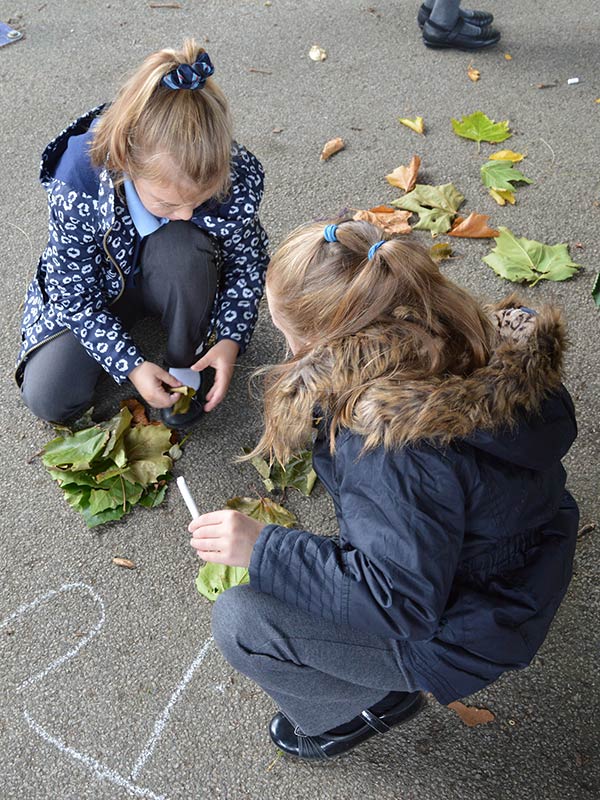
Task for Year 4: Follow the instructions on the sheet and build an Egyptian pyramid – a mini one!
The four mixed ability groups each had a bucket of mud and proceeded to get their hands dirty making mud bricks for the pyramid. Each brick was to measure 7cm x 4cm x 4cm. To determine the total number of bricks needed for the pyramid shape they filled in a number calculation sheet. With the mixing, moulding and calculating all done the bricks were left to dry and construction and presentation of the pyramids took place the following week.
Not all teams got the task technically right and not everyone was brave enough to get their hands dirty. Some teams had worked better together than others, but all had completed the task. Over their weekly lessons outside that term, Year 4 were developing that most essential life skill that the Egyptians pyramid builders must have had in bucket loads: resilience!
“It is very noticeable during Grow sessions some children who struggle academically within the classroom thrive in the outdoors and excel in this type of learning. The tasks are fun, motivating with children engaged in their learning. I love how my class want to be outside in all weathers”
Rachel Littlewood, Teacher.
Working outside with children with behavioural issues
Hyrstmount Junior School, Batley
Darryl was a character inside the classroom whose behaviour became even wilder outside. Together, Grow to School and Darryl built up trust and tamed some of the wildness.
Working in line with his existing management plan, Darryl responded gradually to the behaviour management methods that we put in place. He was presented with choices when he displayed challenging behaviour outside, one of which was to go back inside. When he was seen to be struggling, jobs were given to Darryl working alongside the session leader. Clear boundaries were put in place for Darryl and the whole class when working outside.
A year later and Darryl was overheard berating another child for not listening to instructions – something he was not very good at doing himself the year before. Outside had become a safe and enjoyable place to be. Not just for Darryl but for the teacher and the class too.
Aqueducts make Zane smile
St Thomas CE Primary, Huddersfield
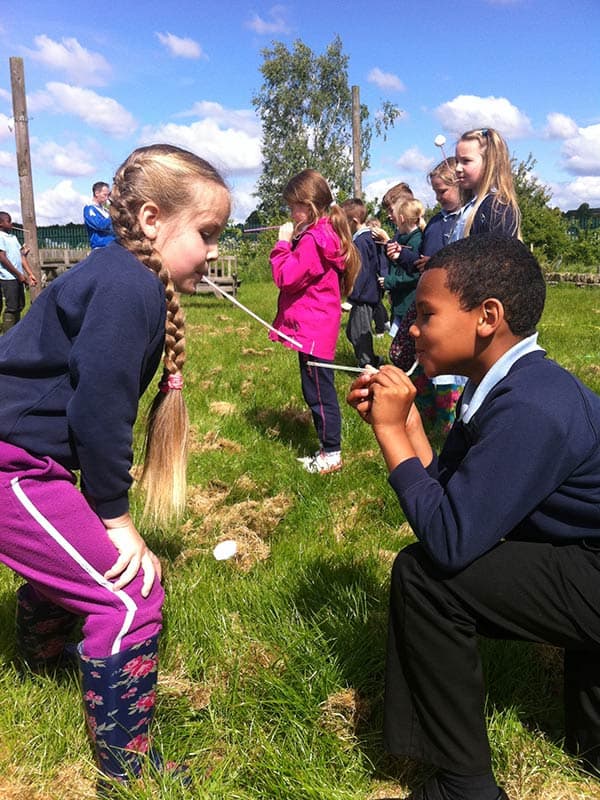
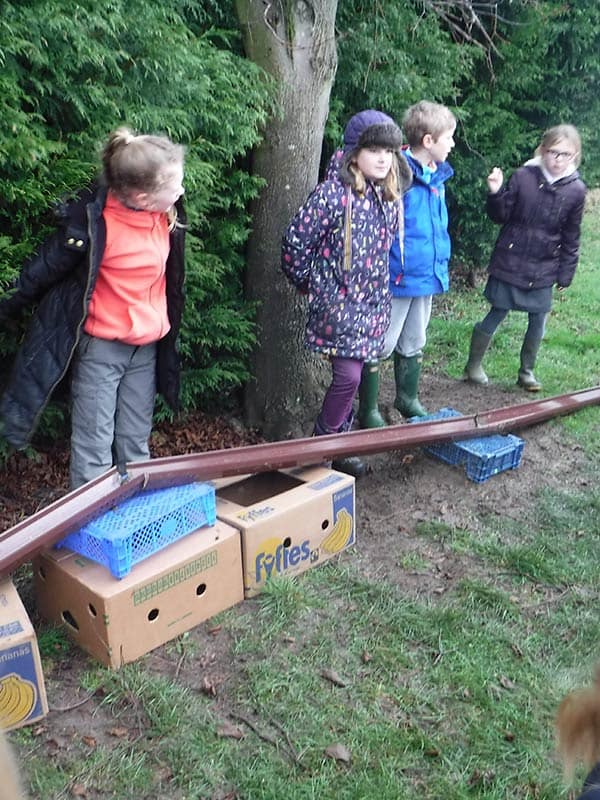
One windy and wet day in November, Zane and his Year 3 class trooped out in wellies and coats into the field for a lesson with Grow to School. They were greeted by guttering, boxes, tennis balls, jugs water and watering cans.
The task: Use the material provided to build a Roman aqueduct. The water must move slowly along the water way. If it moves too quickly the source will run dry.
Zane was working with peers he didn’t normally work with. All the staff expected him to sit looking sad on the side-lines as he normally did, looking up disapprovingly at the rain, not wanting to join in. But this time something else happened.
After 30 minutes of exploration with the guttering – and some good teamwork – the task was completed. A ball was used to test the aqueduct Zane had helped to design and adjustments were made. The water was poured in to see how slowly it flowed. Zane looked excited. When asked if a team member could explain to the class how they had made the aqueduct, Zane, with a big smile on his face, put his hand up for the first time, eager to describe the work he and his peers had done together. He had forgotten about the rain. The teacher could not believe her ears!
School Community
Gardening and cooking with the school community in Crossland Moor
Beaumont Primary Academy School and Oak CE Primary School.
The aim of the project, funded through Community Learning Works, was to engage parents and carers. Each session started with a food quiz and a rummage through vegetable-based recipes. Then we got cooking…and tasting! Kale and sweet potato crisps, pancakes, houmous, curried squash soup, beetroot and chocolate brownies, mixed salads.
The adults benefited from the mixture of chat, cooking, growing and sharing of ideas and concerns around their own and their children’s diet. A highlight for many participants was the chance to cook alongside their children for a few of the sessions in a space that wasn’t home. Running alongside the cooking were vegetable growing sessions in the school garden.
Some went on to make changes to their family’s diets at home, others to pursue more learning opportunities and one parent now runs an afterschool cooking club.
“I never eat salad normally… I find it a bit boring… but this is really nice.”


A garden makeover
St Thomas CE Primary, Huddersfield
The original food growing space at the school was not fit for purpose with large beds and muddy paths. Grow to School was brought in to make the garden more productive and to work with the wider school community to manage the vegetable patch. This project was funded through the school’s PTA.
We worked with the children to draw a plan of the existing garden. Using compasses and mapping techniques the children undertook a visioning exercise. They created some fabulous designs which included a shed for tools, a covered area for discussion, areas for wildlife and accessible growing beds. Our own garden designer, Vashti Maclachlan, took these designs and using her magic, created the space we see today.
Once the hard landscaping had been installed, the school, Grow and the community came together to plant the new garden using the Growbag as a guide. It was a fabulous event supported by 150 families. Thanks to their hard work St Thomas won the Kirklees Neighbourhood Housing School Garden Competition in 2015.
The legacy is a garden that is used as a learning resource and productive 12 months of the year, a community supported afterschool club and an annual community garden day, bringing health and wellbeing benefits for all involved.
“I really enjoy attending after school garden club with my children and helping out at the St Thomas community days. It’s a great opportunity to give something back to the school and engage with my children at school. It’s something fun we can do together and gives us all skills we can use at home in our garden”.
Parent
Make the move to learning outside
Join our mailing list
Stay up to date with outdoor learning.
We’ll just send you information about our own outdoor learning support

